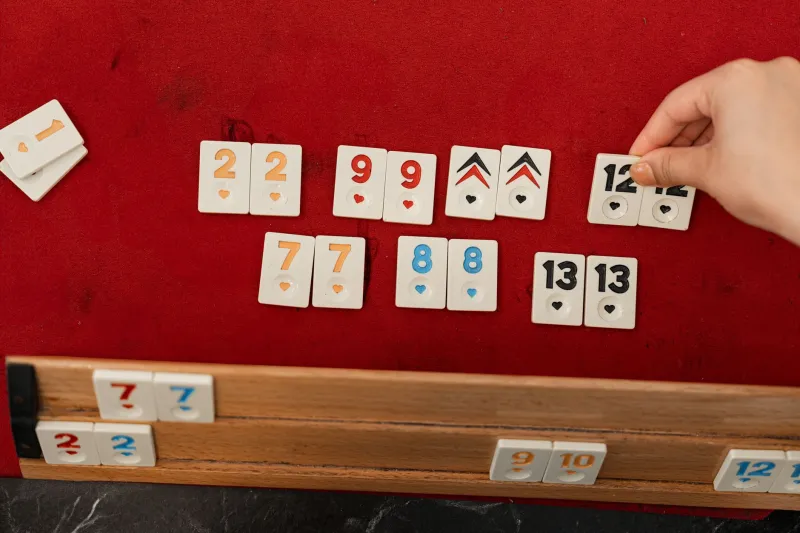
Deal the Family In: The Quiet Revival of America's Kitchen-Table Rummy Night
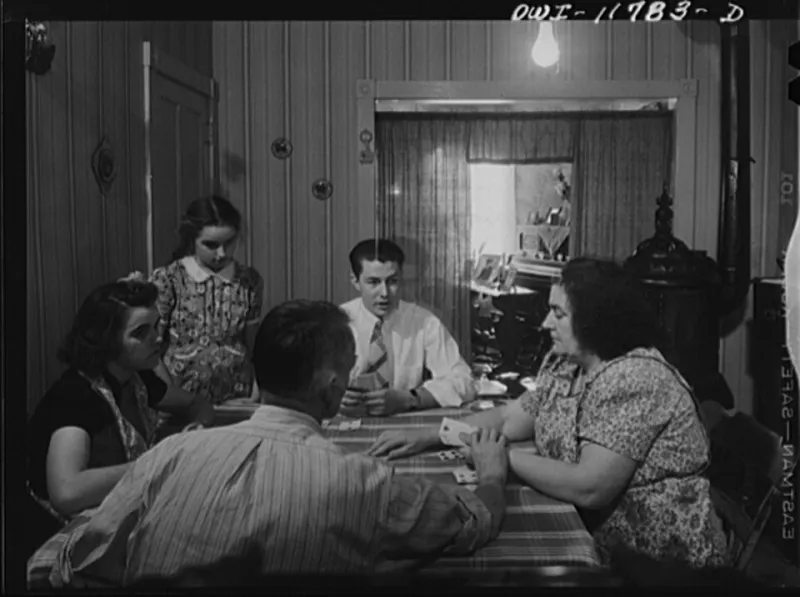
Photo: Marjory Collins, Public domain, via Wikimedia Commons
Somewhere between the streaming subscriptions and the doom-scrolling, American families started missing something simple: sitting around a table with actual people and an actual deck of cards.
And guess what's leading the charge? Rummy. Again.
Walk into a garage in suburban Atlanta on a Friday night and you might find three generations huddled over a 27-card deal. Same story in a Phoenix backyard, a Minnesota lake cabin, a Brooklyn walk-up where the Wi-Fi is spotty but the shuffling is superb. The kitchen table comeback is real, and if you're reading this on 27 Rummy, you're already ahead of the curve.
Why Analog Is Suddenly Cool Again
The pandemic taught us a lot, but its strangest gift might be the rediscovery of slow entertainment. People baked sourdough. People bought record players. And people dug out the card decks their grandparents kept in the hall drawer.
Rummy fits this moment perfectly. It's social without being loud, competitive without being cruel, and cheap without feeling cheap. A single deck plus a folding table plus a pot of coffee equals an entire evening.
There's also the nostalgia factor. For millions of Americans, rummy is the smell of grandma's coffee and the sound of cards slapping a vinyl tablecloth. Post-2020, we started chasing that feeling on purpose.
Why 27 Cards Beats the Standard Deal
Traditional rummy is great. But the 27-card variant — where each player's hand balloons into a sprawling puzzle of runs and sets — is where things get deliciously complicated.
With a standard hand, you can hold your strategy in your head. With 27 cards, your strategy holds you. You're constantly rearranging, discarding, re-prioritizing. It's the difference between checkers and chess, and it keeps every player at the table genuinely engaged instead of coasting on autopilot.
For family game night, that matters. Nobody gets bored. Nobody phones it in. The eight-year-old and the retired uncle are equally lost — and equally hooked.
House Rules Worth Stealing
Every family that plays seriously develops its own constitution. Here are some house-rule variations we've seen making the rounds:
The Buy-Back Rule. A player who goes out can be "bought back in" if another player wants to keep the game going. Costs a quarter to the pot. Keeps Grandma from ending the night too early.
Joker Amnesty. In some households, wild cards can be swapped out of a meld once per game. It adds a layer of endgame drama that kids love.
The Debt Limit. Cap each player's losses at a fixed amount — say, five bucks — so nobody leaves the table angry. Rummy night should never cost a friendship.
Winner Shuffles Next Week. The champion hosts and deals the following session. Built-in accountability, built-in anticipation.
From the App to the Kitchen Table
Here's the part longtime 27 Rummy players already know: online play is the best practice facility in the world for the living room.
When you play online, you get volume. Hundreds of hands in the time a family game might deal twenty. You see discard patterns repeat. You learn how hand values shift as the draw pile shrinks. You develop the discipline to drop deadwood early instead of chasing a miracle run.
Then you show up at Thanksgiving and quietly run the table while your cousins wonder what happened.
The skills transfer directly:
- Discard discipline learned online reads the same at the kitchen table — your opponents are still watching what you throw away.
- Counting skills from tracking high-value cards don't care whether the cards are pixels or cardboard.
- Tilt control is even more important in person, where your face can betray you. Practice your poker face on us first.
Hosting Your Own Comeback Night
Want to start a tradition? Keep it simple.
Pick a recurring night — recurring is the magic word. First Friday. Every Sunday after dinner. Consistency turns a game into a ritual.
Set the stakes low or skip them entirely. A bowl of popcorn on the line produces the same adrenaline as a $50 pot, minus the awkwardness.
Teach the新手 gently. Actually — teach the newcomers gently. Give the beginners a practice hand before real play starts, and let the table agree on house rules before the first deal, not during the first argument.
And keep a notebook. Seriously. The families who've played rummy together for decades all have one — scores, disputes settled, legendary hands recorded for posterity. Your future grandkids will thank you.
The cards were always there in the drawer. Turns out we just needed a reason to pull them out again.