Reading the Collapse: How to Recognize a Losing Hand Before Your Opponent Admits It
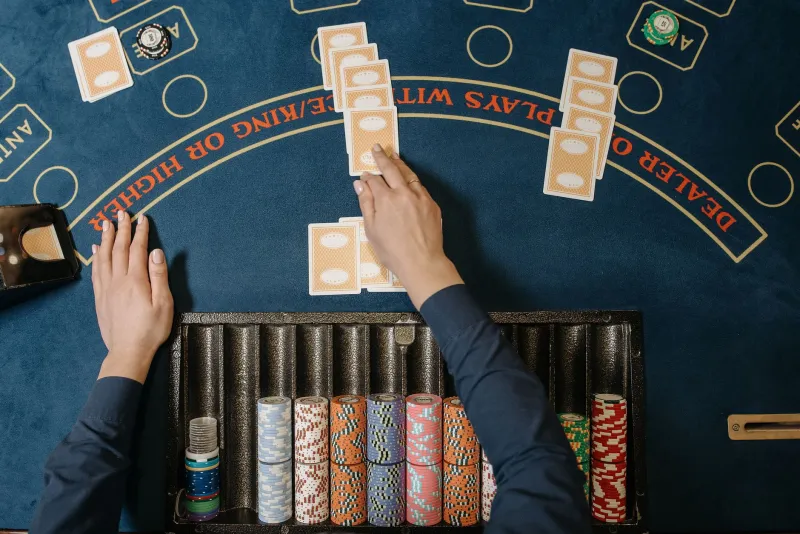
Every rummy player has sat across from someone who was clearly in trouble — fumbling with their draws, hesitating before discards, reorganizing their hand for the fourth time in two minutes — and still managed to let them crawl back into the game. Reading the table isn't just about your own cards. It's about recognizing when someone else's position is already terminal, and having the sharpness to exploit it before they find the one draw that bails them out.
This is the skill that separates reactive players from genuine predators at the table.
What a "Dead Hand" Actually Looks Like
A dead hand isn't just a bad hand — it's a hand that has no realistic path to recovery given the current state of the game. The distinction matters because plenty of players hold difficult hands early in a session and recover just fine. A truly dead hand is one where the needed cards are either already discarded, held by opponents, or statistically improbable enough that chasing them is just burning draws.
The problem is that the player holding the dead hand often doesn't fully accept this reality. Instead, they enter a phase of what we'd call hopeful continuation — drawing cards without a clear plan, holding melds that don't connect, and making discard decisions based on emotion rather than logic. This phase is your window.
The Behavioral Tells That Don't Lie
In live play, the physical signals are often obvious once you know what to look for. But even in online rummy — where you can't see faces — players leave a trail of behavioral data that tells the same story.
Draw hesitation is one of the clearest signals. A player who genuinely has options draws with purpose and speed. Someone who's lost the thread of their hand will pause before drawing, sometimes repeatedly. They're not strategizing — they're hoping. In online play, this shows up as consistent timing delays that break from a player's established rhythm.
Discard patterns that don't add up are another major tell. When a player starts throwing away cards that would normally be considered safe holds — mid-value connectors, partial sequences — it suggests they've abandoned one strategy without committing to another. They're not building toward anything; they're just trying to survive the round.
Repeated hand reorganization in live settings is practically a confession. Players who are confident in their hand structure don't rearrange it constantly. Reshuffling is a physical expression of mental confusion — they're trying to find an angle that isn't there.
Bet sizing inconsistency in formats that involve progressive stakes or side bets is particularly telling. A player who suddenly drops to minimum bets after previously playing more aggressively isn't being cautious — they're trying to minimize exposure on a hand they no longer believe in.
The Desperation Draw: Your Best Signal
Perhaps the most reliable tell of a collapsing hand is what we call the desperation draw — the moment when a player picks up from the discard pile in a way that doesn't match any logical sequence building you've observed in their hand.
When someone grabs a card from the pile that couldn't possibly complete a meld based on what they've been building, one of two things is true: either they're attempting a complete strategic pivot (rare and usually obvious), or they're grasping at anything that might create some structure in a hand that currently has none. The latter is far more common, and it almost always signals that they're deep in trouble.
This is the moment to shift your posture entirely. Stop playing defensively. Stop worrying about what they might have. Start thinking about how to maximize pressure.
Shifting From Reactive to Aggressive
Once you've identified an opponent who's in collapse mode, your entire approach should change. Here's how to press the advantage:
Control the discard pile. If they're fishing for specific cards, your job is to make sure those cards either stay buried or get discarded in a way that doesn't help them. Pay attention to what they've been building and make deliberate decisions about what you put in the pile. Feed them cards that are useless to their apparent strategy while protecting the ones that might give them a lifeline.
Accelerate your own pace. A player in crisis benefits from time. Every additional round gives them another draw, another chance to find the card that bails them out. If your hand is in reasonable shape, start working toward a close — even a modest one — rather than holding out for a perfect meld structure. Locking in a win against a struggling opponent beats losing to their lucky draw.
Don't telegraph your read. This is the mistake that costs players the most. Once you identify someone's weakness, there's a temptation to play visibly aggressively — to essentially announce that you know they're in trouble. Resist this. Consistent, composed play that happens to apply the right pressure is far more effective than showy aggression that puts them on alert.
Watch for the pivot attempt. Sometimes a player who recognizes their hand is dead will try to completely reset their strategy mid-round. This is actually a vulnerable moment — they're dismantling whatever partial structure they had without yet building something new. It creates a window of maximum weakness. If you spot a sudden, radical shift in their discard behavior, that's often the signal that they've given up on their original hand entirely.
Online-Specific Patterns Worth Tracking
In the online environment at 27 Rummy, you're working with timing and betting data rather than physical tells — but the signals are just as real.
Track how long your opponents typically take on draw decisions in the early rounds, then compare that baseline to their behavior later in the game. A player who was quick and decisive early but has slowed to consistent near-timeout decisions is processing uncertainty, not strategy.
Also pay attention to chat behavior if your format allows it. Players who are confident don't feel the need to fill silence. Those who've lost faith in their hand sometimes become either unusually chatty (nervous energy) or go completely silent after being talkative earlier. Neither is conclusive on its own, but both are data points worth noting.
The Ethical Edge
It's worth being clear about something: reading opponents and exploiting weakness isn't gamesmanship — it's the actual game. Rummy rewards attentiveness. The whole point of the discard pile, the draw decisions, the hand management — all of it exists in a social context where information is constantly being exchanged. Players who pay attention to that information and act on it are playing the game correctly.
The players who ignore these signals aren't being more sportsmanlike. They're just leaving money on the table.
At 27 Rummy, we believe that playing sharp means seeing the full picture at the table — your hand, the pile, and the player across from you. When that player's hand is already dead, the sharpest move is to make sure they know it.