Smoke and Mirrors at the Card Table: The Real Cost of Bluffing in 27 Rummy
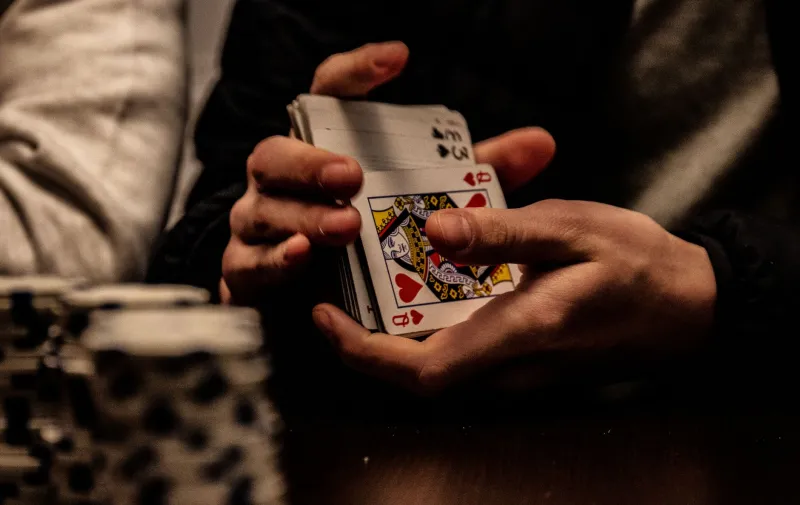
There's a romantic idea that the best rummy players are master deceivers — cool-eyed sharks who puppet their opponents with false tells and phantom melds. And honestly? Sometimes that's true. But here's the part nobody talks about: bluffing has an economy. Every deceptive move you make is a transaction, and the house doesn't always let you walk out ahead.
Let's talk about what fake melds actually cost you — and when, if ever, they're worth the price.
What Game Theory Actually Says About Deception
Game theory has a term for the strategic tension between honest and deceptive play: it's called a mixed-strategy equilibrium. In plain English, that means there's an optimal frequency at which you should bluff — not zero, not always, but somewhere in between that keeps opponents genuinely uncertain about your hand.
In poker, this concept is well-documented. In 27 Rummy, it's criminally underexplored.
With 27 cards in hand, you're managing far more decision points than in a standard 13-card format. That complexity cuts both ways. Yes, there are more opportunities to construct convincing false narratives about your hand composition. But there are also more ways those narratives can unravel — and in a tournament setting, unraveling is expensive.
The core math works like this: if your bluff succeeds 60% of the time and costs you 15 points when it fails, the expected value only breaks positive if the successful bluff saves you more than 22.5 points on average. That's not a trivial threshold. Most casual players dramatically overestimate their bluff success rate and underestimate what failure actually costs them.
The Discard as a Weapon (And a Trap)
In 27 Rummy, your discard pile is your most public piece of communication. Every card you throw tells a story — and smart opponents are reading every chapter.
A common bluff involves discarding cards that appear to signal a completed or near-complete sequence, when in reality you're still miles from a valid meld. The goal is to make your opponent hold onto cards that don't actually threaten you, effectively tying up their hand with dead weight.
Here's where it gets interesting: this works beautifully in mid-game when your opponent has limited information. But in later rounds, when the discard pile is deep and an experienced player has been tracking your draws, those same signals become a liability. You've essentially handed them a roadmap of your deception.
Elite tournament players — the kind grinding for serious prize pools on platforms like 27 Rummy — treat the discard pile like a chess board. Every piece they move is calculated several turns ahead. Beginners treat it like a garbage can.
Real Tournament Scenarios: Profit vs. Bleed
Scenario A — The Profitable Fake: It's mid-tournament, moderate stakes. You're holding a near-complete pure sequence in spades, but you deliberately discard a low spade to suggest you've already closed that meld. Your opponent, reading the signal, stops holding spades in anticipation of blocking you — freeing up their hand for other builds. You never needed those cards anyway. Cost: zero. Benefit: opponent's hand management is disrupted for 3-4 turns.
This is what a positive expected-value bluff looks like. The deception costs you nothing material and creates real friction in your opponent's strategy.
Scenario B — The Expensive Phantom: You're down in points and desperate. You start holding onto mid-value cards across three different partial sequences to project a "full hand" image — hoping your opponent slows their declaration. But you're not actually close to any valid meld. You've now locked yourself into a hand full of dead weight, burning draw after draw on cards that don't fit anything. When your opponent declares, you're sitting on 40+ deadwood points.
This is what a negative expected-value bluff looks like. The deception cost you everything.
The difference between these two scenarios isn't talent. It's awareness of what the bluff actually requires you to sacrifice.
The Psychology Multiplier
Here's something the pure math misses: bluffing has a psychological cost that compounds over time. Every fake meld you maintain requires mental energy to sustain. You have to remember what you've "signaled," track whether your opponent has bought it, and adjust your actual strategy around the fiction you've created.
In a long tournament session — the kind where you're playing three or four hours deep — that cognitive overhead adds up. Players who bluff heavily early often find themselves mentally fatigued in the late rounds, making sloppy decisions precisely when the stakes are highest.
Sports psychologists who work with competitive card players call this "narrative debt" — the mental cost of maintaining a false story about your hand. The best players keep their deceptions simple and short-lived, cashing them in quickly rather than rolling them over into the next hand.
When Bluffing Is Actually Profitable: A Checklist
Before you commit to a deceptive line of play, run through these four questions:
- What does this bluff cost me in actual cards? If maintaining the fake meld requires you to hold cards that hurt your real build, you're paying a material price.
- How long does the bluff need to last? Short-duration deceptions are almost always more profitable than multi-turn commitments.
- Is my opponent actually watching? Bluffing a distracted or inexperienced player is often wasted effort — they're not reading your signals anyway.
- What's the downside if they call my bluff? In 27 Rummy, getting caught in a deception isn't just embarrassing — it can mean a devastating point swing.
If you can't answer all four cleanly, you're bluffing on vibes. And vibes are not a bankroll strategy.
The Bottom Line
Deception in 27 Rummy is a tool, not a personality trait. The players who use it profitably treat every bluff like a financial instrument — they know the cost, they know the expected return, and they know when to close the position.
The players who use it recklessly? They're the ones funding everyone else's tournament runs.
Deal smart. The cards don't lie — but knowing when you should is half the game.