Why 27 Cards Changes Everything: The Strategic Science Behind Hand Size
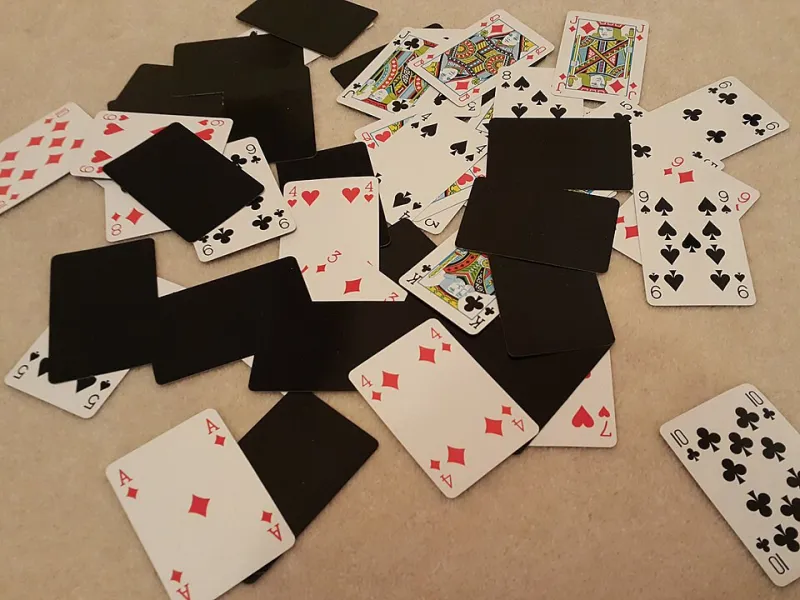
Photo: NottNott, CC0, via Wikimedia Commons
Ask a casual rummy player why they lost a tough hand and they'll usually point to bad draws, a cold deck, or an opponent who "got lucky." Ask a serious competitor the same question and you'll get a completely different answer—one that probably involves timing, information density, and the specific weight that comes with managing a 27-card hand.
Hand size isn't just a game mechanic. It's the invisible architecture that determines how fast you have to think, how well your bluffs hold up, and whether your risk tolerance is working for you or against you. And in the format we've built this whole platform around, 27 cards sits in a genuinely fascinating sweet spot that rewards a very specific kind of player.
Let's break down exactly why.
The Information Problem Gets Real at 27
In shorter-hand rummy variants—think six or eight cards—the decision tree is relatively shallow. You've got fewer cards to track, fewer combinations to evaluate, and the game resolves quickly. Mistakes happen, sure, but the window for them is narrow. Conversely, formats with very large hands (some variants push past 40 cards) create so much information that players tend to fall back on pattern recognition and intuition rather than sharp calculation.
27 cards hits a middle zone that's genuinely uncomfortable in the best possible way. You're holding enough cards that meaningful combinations start to emerge organically—but not so many that you lose track of what's live, what's dead, and what your opponent might be building toward. Cognitive load is real, and 27 cards pushes you right to the edge of what most people can manage without a structured mental framework.
Recreational players typically don't have that framework. They sort their hand by suit or value, make a few obvious melds, and react to whatever comes off the draw pile. Competitive players approach those same 27 cards as a living data set—constantly updating their read on the deck, their opponent's hand shape, and their own risk exposure.
Speed of Decision-Making: Where Casual Players Fall Apart
Here's something that doesn't get talked about enough in rummy strategy circles: hand size directly affects how quickly you need to commit to a line of play.
With 27 cards, you have more potential melds available early in the game, which sounds like an advantage. And it is—but only if you can evaluate those options efficiently. Players who haven't trained themselves to process a large hand quickly end up spending too long on early decisions, which creates a cascade of problems. They fall behind on tempo, miss the window to block opponent melds, and often hold onto speculative combinations for too long because they haven't committed to a clear strategic direction.
Think of it like the NFL draft room. You've got a board full of options, a clock ticking down, and real consequences for hesitation. The teams that win aren't necessarily the ones with the most talent available—they're the ones who've done enough preparation that the decision, when it comes, feels almost automatic.
The same logic applies here. Drilling 27-card hand evaluations until your sorting process becomes second nature is one of the highest-leverage things a developing player can do. Speed isn't about rushing—it's about having already done the slow thinking before you sat down at the table.
Bluff Effectiveness and the 27-Card Window
This one surprises a lot of players when they first hear it: hand size has a significant effect on how well deceptive discard strategies work.
In a small-hand game, your opponent has relatively few cards, which means the range of hands they could plausibly be holding is narrow. A suspicious discard stands out fast. But with 27 cards in play, the possibility space is much wider—there are simply more legitimate reasons to hold or release any given card. That ambiguity is your friend if you know how to use it.
Skilful players in the 27-card format use this to their advantage by engineering discard sequences that look like natural hand-building decisions while actually steering opponents away from completing their melds. The key is that your deception has to be consistent across multiple turns. A single misleading discard is easy to fake; a three- or four-turn sequence that tells a coherent false story requires real planning.
Of course, your opponent has the same tools available. The players who thrive in this format are the ones who can simultaneously maintain their own deceptive narrative while reading the story their opponent's discards are telling—and figuring out whether that story is real.
Risk Tolerance: The 27-Card Recalibration
One of the most practical implications of the 27-card format is how it should change your risk calculus compared to shorter games.
With more cards in hand, you have more flexibility to carry speculative combinations without immediately sacrificing your defensive position. A partial sequence that would be dead weight in an eight-card game might be entirely worth holding in a 27-card context—you have the hand depth to absorb that dead wood while waiting for the draw that completes it.
But this cuts both ways. Because opponents also have more cards, their hands develop faster and in less predictable directions. Sitting on a speculative hold too long in a 27-card game can mean your opponent finishes before you've even committed to your primary meld strategy.
The practical takeaway: expand your risk window slightly compared to what you'd do in shorter formats, but build in a hard checkpoint around the midpoint of the game. If your speculative combinations haven't gotten closer to completion by then, cut them loose. The 27-card format rewards patience early and decisiveness late—not the other way around.
What This Means for Your Tournament Prep
If you're preparing for competitive play on 27 Rummy, the single most useful thing you can do is deliberately practice in this specific format rather than treating all rummy variants as interchangeable. The strategic principles that serve you well in a 13-card game will only partially transfer. The timing instincts are different. The bluff windows are different. The risk math is different.
Play enough 27-card hands that the format starts to feel like home—where the size of the hand isn't a source of stress but a familiar landscape you know how to navigate. That comfort, more than any individual tactic, is what separates the players who occasionally win from the ones who consistently do.
The sweet spot isn't just about the number. It's about what that number demands of you—and whether you're ready to deliver.