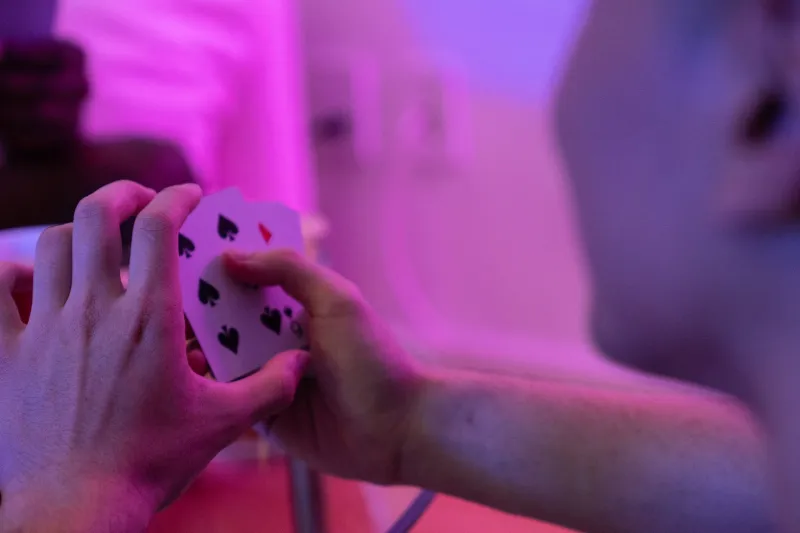
Cut Your Losses, Keep Your Edge: The Art of Walking Away From a Bad Hand
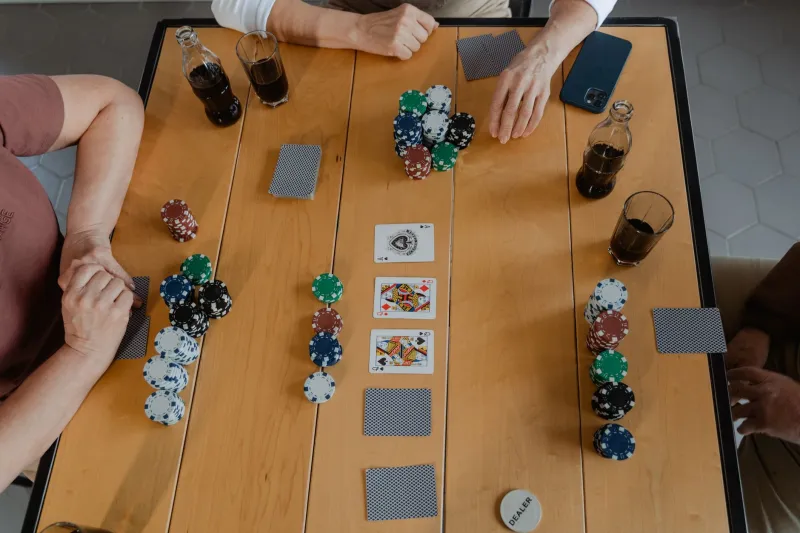
Here's something most casual players never want to admit: some of the best moves you'll ever make in 27 Rummy happen before you play a single card. Specifically, the decision to bail on a hand early — before the damage compounds, before your point total spirals, and before your emotions start running the show — is a skill that separates grinders from champions.
It sounds almost too simple. Walk away. Stop playing. Let it go. But if folding were easy, you wouldn't see experienced players hemorrhaging points round after round on hands they knew, somewhere deep down, were already lost.
So why do they keep going? And more importantly, how do you stop yourself from doing the same thing?
The Psychology Behind Staying Too Long
There's a concept in behavioral economics called the sunk cost fallacy — the very human tendency to keep investing in something just because you've already put resources into it. In rummy, this plays out constantly. You've spent three draws chasing a sequence, you've held onto a high-value card waiting for its match, and now you're emotionally committed to seeing this hand through.
The problem is, none of that history changes your current odds. The cards don't care how long you've been waiting. The math doesn't reward loyalty to a losing position.
Top players understand this viscerally. They've trained themselves to evaluate a hand based on where it stands right now, not where it stood two rounds ago or where they hoped it would be by now. That mental reset — treating each decision point as a fresh evaluation — is genuinely difficult to develop, but it's also genuinely game-changing.
What a 'Fighting Chance' Actually Looks Like
Not every tough hand deserves to be abandoned. That's worth saying clearly, because the goal isn't to fold at the first sign of difficulty. The goal is to fold at the right sign of difficulty.
A fighting chance hand typically has a few identifiable features. You're within striking distance of a valid meld or two. The cards you need haven't shown up in the discard pile yet, meaning they're theoretically still in circulation. Your point exposure — the value of unmelded cards sitting in your hand — is still manageable relative to what you might gain by completing the hand.
Contrast that with a sunk cost trap. You're three or four draws deep with no meaningful progress. The cards you're waiting on have partially surfaced elsewhere, cutting your odds. Your high-value unmelded cards are stacking up, and the gap between what you're holding and what you need is widening rather than narrowing.
The honest question to ask yourself in that moment: If I were dealt this exact hand right now, with no prior investment, would I choose to play it? If the answer is no, you're probably in sunk cost territory.
Reading the Room: Tournament Pressure and the Fold Decision
The stakes change the calculus. In casual play, riding out a bad hand might cost you a round. In tournament settings, it can cost you a seat.
Consider what happens in multi-round tournament formats, which are increasingly common in the US competitive scene. A player who consistently refuses to fold marginal hands doesn't just lose those individual rounds — they carry the point damage forward, compressing their margin for error in subsequent rounds. By the time they reach the later stages of a tournament, they're often playing from behind before the first card drops.
Conversely, players who develop a clean fold discipline tend to arrive at the later rounds with healthier point totals and, crucially, more emotional bandwidth. Decision fatigue is real. If you've spent two hours fighting losing battles, your judgment in the rounds that actually matter is going to be compromised.
Some of the most instructive moments in American rummy tournament coverage involve watching elite players fold hands that look playable to spectators. From the outside, it seems overly conservative. From inside the player's calculation, it's often the highest-percentage move available.
Building Your Own Fold Framework
You don't need to rely on instinct alone here. A few practical checkpoints can help you make cleaner decisions in the heat of a game.
Check your point exposure first. Before you decide whether to continue, tally up the value of your unmelded cards. If you're sitting on a significant point deficit and you're not close to a meld, the clock is already ticking against you.
Track what's gone. The discard pile is a data source, not just a trash heap. If the cards you're waiting on have shown up there, your odds just dropped. Update your assessment accordingly.
Set a draw limit before you start. Some experienced players give themselves a mental cap — say, three more draws to make meaningful progress — before they commit to folding. Having a predetermined threshold removes the temptation to keep extending that deadline indefinitely.
Separate the hand from your ego. This one's harder than it sounds. Folding can feel like admitting failure, especially after you've invested time and strategy into a hand. Reframe it: folding is an active decision, not a passive defeat. You're choosing to protect your position rather than sacrifice it.
The Bankroll Angle Nobody Talks About
For players who participate in buy-in games or tournaments, the fold decision has a financial dimension that's easy to overlook in the moment.
Consistent refusal to fold marginal hands isn't just a strategic problem — it's a bankroll management problem. Every round where you chase a hand that wasn't worth chasing is a round where you're paying for the privilege of losing more than you needed to. Over dozens of sessions, that adds up in ways that are genuinely hard to recover from.
Smart bankroll management and smart hand management are more connected than most players realize. The same discipline that keeps you from over-investing in a losing hand is the discipline that keeps your buy-in budget sustainable over time.
The Bigger Picture
Here's the reframe that tends to stick with players once they really internalize it: folding a bad hand isn't giving up on the game. It's protecting your ability to play the game — in the next round, the next tournament, the next opportunity.
The best rummy players aren't the ones who fight hardest for every hand. They're the ones who fight hardest for the right hands. Learning to tell the difference, and acting on that distinction even when it stings, is what separates players who plateau from players who keep improving.
At 27 Rummy, we talk a lot about playing sharp. Sometimes the sharpest play you can make is the one where you put your cards down, protect your stack, and wait for a better spot. That's not a retreat. That's strategy.