Mind Games at 27: How a Bigger Hand Quietly Breaks Your Opponents
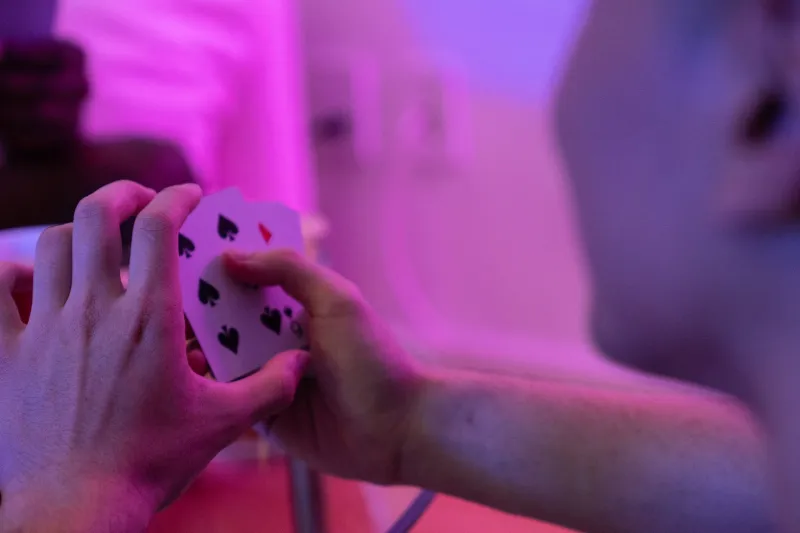
Most card players in America learn rummy with a relatively compact hand — 10, 13 cards, maybe a few more depending on the variant. You hold them, you sort them, and your brain gets comfortable with the mental load. Then you sit down at a 27-card table, and something subtly but unmistakably shifts.
It's not just more cards. It's more noise. More decisions. More pathways. And for players who haven't trained their minds to handle that volume, the pressure starts building long before anyone lays down a meld.
That psychological pressure? If you know how to work with it — and how to amplify it for your opponents — you've already got an edge that has nothing to do with the luck of the draw.
The Cognitive Overload Nobody Talks About
Here's the thing about 27 cards: the human brain isn't naturally wired to hold that many variables in working memory at once. Cognitive psychology research consistently shows that people struggle to actively track more than seven to nine distinct items simultaneously. When you're holding more than three times that number in your hand, something has to give.
What gives, usually, is decision speed and confidence.
Players who are accustomed to tighter formats start second-guessing themselves. They'll spot a potential sequence, then notice a possible set, then realize they might be sitting on the components of two different melds — and suddenly they're paralyzed by the abundance of options rather than energized by it. That hesitation is visible. It shows up in longer pause times, in erratic discard patterns, in the way someone shifts in their chair when they draw a card that complicates an already crowded hand.
Watching for those signs at your table isn't just interesting — it's profitable.
Risk Tolerance Gets Weird at Higher Card Counts
Here's something that doesn't get discussed enough in rummy strategy circles: hand size fundamentally changes how players calibrate risk.
With a smaller hand, every card matters in an almost binary way — it either helps or it doesn't. Players make relatively clean decisions. But at 27 cards, there's so much potential in any given hand that players start unconsciously hoarding. They hold onto high-value cards longer because they keep seeing almost fits. They're reluctant to discard anything that might become useful three or four draws from now.
This is what behavioral economists would call "option value bias" — the tendency to overweight future possibilities when you're surrounded by apparent opportunity. In a 27-card game, the sheer volume of cards creates a kind of decision fog that makes people irrationally conservative about discarding, even when dumping a card would clearly speed up their path to victory.
The savvy player recognizes this fog in themselves and actively fights it. But more importantly, they recognize it in opponents — and they exploit it by forcing the kind of discard decisions that are hardest to make under cognitive load.
How to Weaponize the Pressure
So how do you actually use this knowledge at the table? A few practical angles worth building into your game:
Play with tempo, not just cards. When you draw and discard quickly, you signal confidence and control. That rhythm puts pressure on slower-thinking opponents to match your pace, which often causes them to make hastier, less considered decisions. In a 27-card format where careful hand management is already difficult, disrupting someone's thinking tempo can cascade into real mistakes.
Discard in ways that force hard choices. Because everyone's hand is large, the discard pile becomes a loaded psychological tool. When you toss something that could theoretically fit multiple melds, you're not just clearing your hand — you're creating a visible temptation that forces opponents to make a split-second risk calculation. Pick it up and reveal information about your hand? Or let it go and potentially miss a key piece? That micro-stress, repeated over a full game, adds up.
Recognize the "too many options" freeze. Some of your most dangerous opponents aren't the aggressive ones — they're the methodical thinkers who genuinely thrive on complexity. Those players won't freeze; they'll embrace the 27-card chaos. Adjust your read on each opponent early. The ones who seem energized by a big hand are the ones you need to disrupt most aggressively.
The Patience Paradox
Here's where 27 Rummy gets philosophically interesting. The format rewards patience — managing a large hand well requires a long-game mentality. But patience itself becomes a psychological weapon and a vulnerability simultaneously.
When you play patient, you project calm. That calm can rattle opponents who are already struggling with cognitive overload. They see someone who looks completely unbothered by 27 cards, and it plants a seed of doubt: do they know something I don't?
But patience also has a ceiling. Hold on too long, and your hand becomes a liability — a sprawling collection of near-melds that never quite come together. The psychological art of 27 Rummy is knowing exactly when patience tips into passivity, and pulling the trigger before your opponents figure out you were waiting at all.
The best players at the highest levels of 27 Rummy have internalized this balance. They've put in the reps — both at the table and in studying the mental dynamics of the game — until managing a large hand feels as natural as breathing. That fluency is itself a form of intimidation.
Building Your Mental Game for 27 Cards
If you want to consistently turn the psychological dynamics of this format in your favor, start with some deliberate practice habits:
- Deal yourself 27-card hands and sort them against a timer. Building speed and confidence in hand organization reduces cognitive load during actual play, freeing up mental bandwidth for reading opponents.
- Review your discard decisions after each session. Ask yourself: was that discard driven by genuine strategy, or did I dump it because I was overwhelmed? Identifying your own cognitive fatigue patterns is the first step to managing them.
- Study how your regular opponents handle the early rounds. The first few draws in a 27-card game reveal a lot about how someone processes complexity. File those reads away.
The 27-card format isn't just a longer version of regular rummy. It's a fundamentally different psychological environment — one where mental endurance, decision clarity, and the ability to project calm under pressure matter just as much as knowing your sequences and sets.
Deal smart. Because in this format, the mind game starts the moment those 27 cards hit the table.