Halfway to Nowhere: How to Tell a 27 Rummy Hand Is Dying Before the Endgame

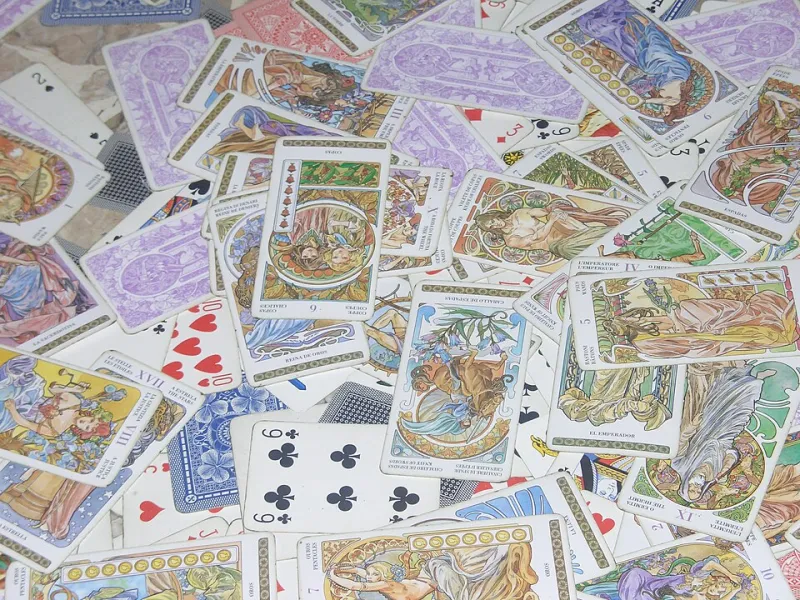
Photo: Basile Morin, CC BY 4.0, via Wikimedia Commons
Every 27 Rummy hand has three acts. The opening draw is the audition, the endgame is the curtain call, and the middle game is the part nobody rehearses. That's the odd truth about this game — players spend hours studying opening theory and highlight-reel finishes, then wing it for the twenty-odd turns in between. And it's in those turns that most hands actually die.
Not loudly, either. There's rarely a single catastrophic misplay. A hand goes bad the way a lawn goes bad — a little neglect, a little denial, and then one day you look up and it's just weeds. Let's walk through the three ways that happens, and then talk about how sharp players catch it early.
Mistake One: Loyalty to a Direction You've Already Lost
You commit on turn three. The cards suggest a run-heavy build, you like the shape, you start collecting. By turn twelve, the deck has made it clear it has other plans. You've seen four of your outs hit the discard pile. The player to your right is clearly fishing the same suits.
And you keep going anyway.
This is sunk-cost thinking wearing a strategy hat. The emotional pull is real — you've invested turns, you've told yourself a story about how this hand ends. Abandoning it feels like admitting you were wrong, and nobody at a card table wants to do that. But the cards don't grade you on consistency. They grade you on what you do from here.
Elite players treat a committed direction as a hypothesis, not a promise. The moment the evidence turns, they're willing to burn three turns of progress to get back into a hand that can actually win.
Mistake Two: Playing the Hand You Wanted Instead of the One You Have
There's a version of this in every card game: the player who keeps holding a card because of what it could become. One more draw and it's gold. One more draw. One more.
In 27 Rummy, with a bloated hand and limited draws, that optimism compounds fast. Every card you hold 'just in case' is a card you couldn't replace, a lane you couldn't open, a decision you've deferred. The middle game is where that debt comes due.
A useful habit: at the midpoint of any hand, physically describe your hand out loud, in plain terms. Not what it might be — what it is. "I have a partial set and two dead connectors." Saying it plainly tends to break the spell.
Mistake Three: Spending Draws on Hope Instead of Information
The middle game is where information gets cheap and hope gets expensive. If you're drawing purely to complete a plan that may already be dead, you're not gaining anything except another turn older.
Sharp players use the middle turns to learn. Every discard they take, every card they let pass, every bet they refuse tells them something about the deck and about the seats around them. When a hand is genuinely alive, that information sharpens the finish. When it isn't, it gives you the earliest possible signal to bail.
Here's the trick, though: information only pays if you're willing to act on it. Drawing for data and then ignoring the data is just an expensive hobby.
The Three-Question Pivot Check
Before you make your midpoint discard, run this quickly. It takes about four seconds.
- Has my best-case finish gotten worse in the last five turns? If yes, your direction is fading.
- Are my outs still in the deck, or am I drawing at a memory? Count. Don't estimate.
- If I were dealt this exact hand right now, fresh, would I play it this way? If the answer is no, you're not playing the hand — you're defending a decision.
Any two 'bad' answers and it's time to pivot. Not next turn. Now. Pivots get more expensive the longer you wait, and a clean pivot on turn fourteen beats a heroic scramble on turn twenty-two nine times out of ten.
What Good Pivoting Actually Looks Like
Newer players hear 'pivot' and picture chaos — throwing the hand away and starting over. Real pivots are quieter than that. You're not restarting; you're re-weighting. The cards you keep change. The discards you take change. The target you're building toward changes from a run to a set, or from a long hand to a tight, defensible one.
The tell of a great middle-game player is that their hands change shape two or three times over the course of a session, and you never quite notice it happening. They aren't attached to a plan. They're attached to the win.
The Middle Is Where You Actually Play
Opening draws are mostly the deck's doing. Endgames get decided in a handful of forced moves. But the middle — that's yours. It's the stretch where skill has the most room to work and where most players are on autopilot.
Treat those turns like the main event instead of the lull between highlights, and you'll find something interesting happens: fewer hands that 'just didn't come together,' and a lot more that did.
Deal smart. Play sharp. Win big.