Speak Rummy: The Card-Night Dictionary Nobody Hands You at the Door
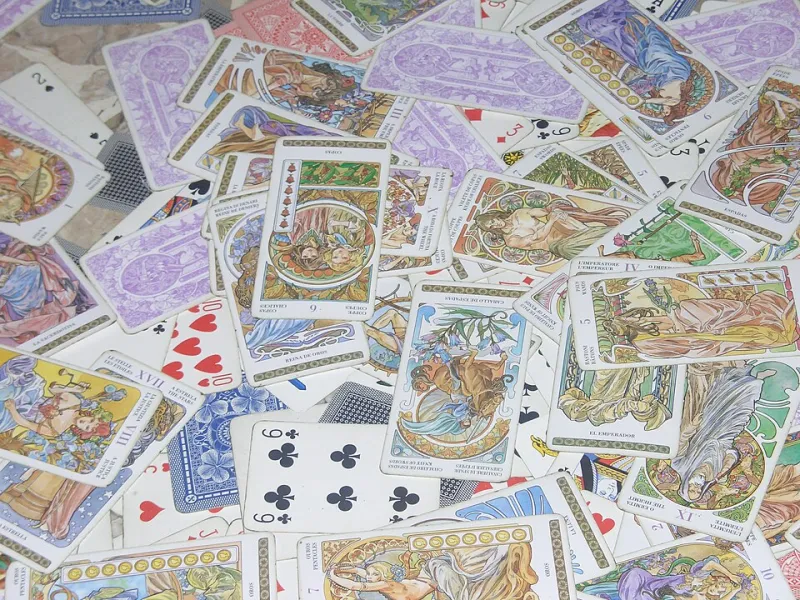
Photo: Covetrick, CC BY-SA 4.0, via Wikimedia Commons
Nobody teaches you the language. You sit down at a 27 Rummy table, someone says "that's deadwood, right?" and you nod like you know, and then you spend the rest of the night quietly guessing. It's the least fair part of learning any card game, and it's completely fixable.
Here's the vocabulary, translated into normal American English, with an example for each one.
The Hand
Hand — the cards you're holding, and also one complete round of play. Context tells you which. "I had a terrible hand" and "let's play one more hand" are both correct.
Deadwood — the cards in your hand that aren't doing any work. No meld, no future, just weight. Example: three unconnected cards in three different suits? That's your deadwood.
Meld — any group of cards that works together and can be laid down. Your melds are your engine; everything else is deadwood.
Set (also called a book) — three or four cards of the same rank, different suits. Example: 8 of clubs, 8 of diamonds, 8 of spades.
Run (also called a sequence) — three or more cards of the same suit in order. Example: 5, 6, 7 of hearts.
Pure vs. impure — a pure meld doesn't use a wild card. An impure one does. Same shape, different strength, and the distinction matters at scoring time.
Wild card / joker — a card the host designates as able to substitute for any other card. Ask before the first deal which cards are wild, because it varies from table to table and everyone assumes they're the one who told you.
Layoff — adding a card to a meld that's already on the table. Example: someone puts down 5-6-7 of hearts, and you lay off the 8 of hearts. Some tables allow it, some don't. Ask.
The Piles
Stock — the face-down pile you draw from. The unknown.
Discard pile — the face-up pile everyone throws onto. The known. Learning to read this pile is a whole skill of its own, and it's where most beginner advantages are actually won.
Pick and discard — the basic turn structure: take a card from somewhere, throw one away. Sounds simple until you've got thirteen decisions crammed into it.
Dead card — a card that's useless in your hand and unlikely to be useful to anyone else. Different from deadwood, and people mix them up constantly. Deadwood is a state. Dead card is a judgment call.
Danger card — the opposite of a dead card. A card you'd hate to hand to the player on your left. Discarding a danger card is a donation. Example: throwing a low card in your opponent's strongest suit when they've been picking from that suit all night.
The Moves
Going out — getting rid of your last card or completing your hand, ending the round. Also called showing, at some tables.
Showing — laying your melds face-up so the table can verify you actually went out. Most rule disputes live here, so show cleanly and quickly.
Drop — folding out of a hand before it finishes, usually taking a penalty instead of a full loss. Example: dropping on the third turn when your hand is a disaster. Some players call it a fold. Same thing.
Knock — at tables that use it, an announcement that you're one card from going out. Purely informational, occasionally strategic, often ignored.
Cut and burn — cutting the deck before the deal and setting aside a card. Mostly ritual. Rituals matter more than people admit.
The Terms People Get Wrong
A few pairs that cause more arguments than any actual rule:
- Set vs. run. A set is same rank, different suits. A run is same suit, consecutive rank. If someone says "sequence of aces" and means four aces, they mean a set.
- Deadwood vs. dead card. Deadwood is your junk pile. A dead card is a card nobody wants. You can have no deadwood and still pitch a dead card.
- Drop vs. get out. Dropping means quitting the hand. Going out means finishing it. Never confuse the two in front of someone keeping score.
- Stock vs. discard pile. The stock is hidden. The discard pile is public. Drawing from the wrong one is the single most common beginner mistake, and it's always dramatic.
- Wild card vs. joker. At some tables the joker is wild, at others a printed joker plus a designated rank are both wild, and at others a joker is just a joker. Ask first, argue later.
Your Pocket Cheat Sheet
Copy this to your phone notes before the next game night:
- Deadwood = the cards not in a meld, the stuff you're trying to shed.
- Meld = set or run. Set = same rank. Run = same suit, in order.
- Layoff = adding to a meld already on the table. Allowed only if the table says so.
- Stock = draw pile. Discard pile = the thing everyone can see. Watch it.
- Danger card = the discard that helps your opponent. Think twice before you throw it.
- Drop = fold the hand and take your penalty. Go out = finish the hand. Don't mix them up.
- Wild card = ask before the deal. Every table has a different answer.
Why This Matters More Than It Sounds
Rummy is a game of small information advantages. Half of those advantages come from understanding what people are saying about the table. If you don't know what a danger card is, you can't be warned about one. If you've never heard the phrase layoff, you'll sit on a card that was worth playing three turns ago.
So ask. Nobody at a friendly 27 Rummy table has ever been annoyed by a genuine question — they've only ever been annoyed by someone pretending to know and then throwing the wrong card.