Three's Company, Four's a Crowd: Rethinking Your 27 Rummy Strategy When Only Three Seats Are Filled

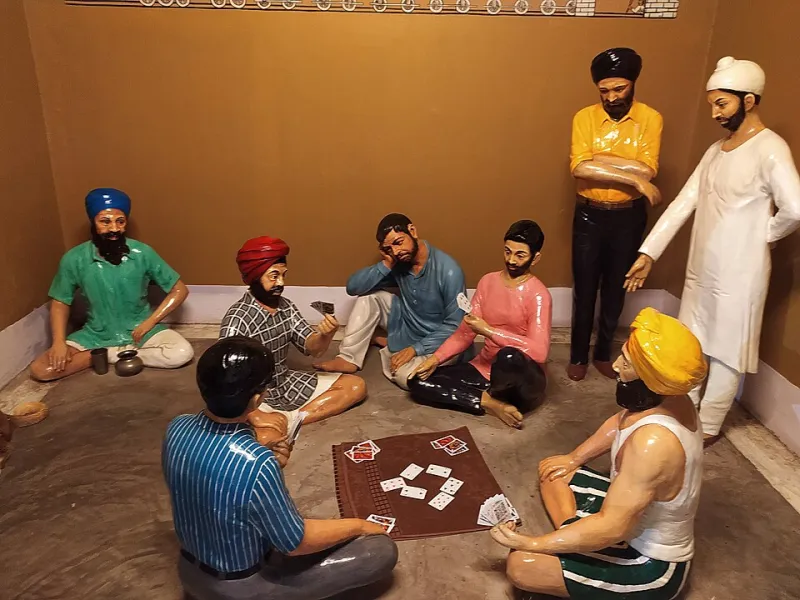
Photo: Ahmed Emad Hamdy, CC BY-SA 4.0, via Wikimedia Commons
The fourth regular texts at 7:40. Can't make it, sorry. The host shrugs, deals three hands instead of four, and everybody settles in to play the same game they always play.
That's the mistake. Three-handed 27 Rummy isn't a watered-down four-handed night. It's a different game wearing the same deck.
A Smaller Table Changes the Arithmetic First
27 Rummy already runs on a lean deck, which is why the counting crowd loves it. Take one hand out of the rotation and something subtle happens: cards that would normally be buried in a fourth opponent's grip are suddenly live, and the discard pile stops looking like a graveyard and starts looking like a supply line.
You also get more turns per shuffle. In a four-seat game, a full orbit costs you three other players' worth of decisions before it comes back to you. At three seats, the wheel spins faster and the deck thins faster in real terms. By the third or fourth trip around, a careful player can have a genuinely useful picture of what's left — not perfect information, but a lot closer than anyone gets at a crowded table.
That has a direct consequence: long-shot holds get worse. When you can count the deck with reasonable confidence, hoping a card is still buried deep becomes an act of faith rather than a strategy.
Your Discard Has a Name On It
Seat order runs to the left. In four-handed play, the person who can grab your discard is one of three candidates, and there's a buffer seat in the middle of the table absorbing some of the damage.
At three seats, that relationship is fixed and personal for the entire session. The player on your left is the only person who gets first crack at everything you throw away. If they're one meld away from going out, every card you pitch is a gift with a bow on it.
The flip side is that you're also the first person to see their discards. That upstream/downstream lane is the most important information channel at a three-player table, and it's the one most players ignore because they're busy watching the deck instead of the person sitting across from them.
So the adjustment isn't 'be careful with discards.' It's be specific with discards. Ask who benefits before the card leaves your hand. If the answer is 'nobody,' and those cards are getting rarer the longer the hand runs, you've found a good pitch.
Where the Aggression Dial Actually Goes
The instinct at a thinner table is to play looser, because the competition is lighter. That's half right at best.
The correct adjustment isn't more aggression — it's less waiting. Three-player hands complete more often than four-player hands because there's less crowding for the same cards and fewer ways for the hand to stall out. That means the winner is usually the player who commits first, not the one who holds the longest.
Chasing a three-card draw for four consecutive turns is a reasonable gamble in a four-handed game where hands routinely grind to a halt. Three-handed, hands don't grind — they close. If you're still building while the player to your left is melding down to two cards, you haven't been unlucky. You've been playing a different game than they are.
A practical rule of thumb: by your third or fourth turn, decide whether you're building or bailing. Then actually do the thing you decided. Indecision is the most expensive habit at a three-seat table, because the deck won't wait around for you to make up your mind.
The Mistake: Playing for Second
Here's the leak nobody talks about. In a three-player game, plenty of players unconsciously treat the third seat as a safety valve. They target the weakest opponent, they coast when they're comfortably ahead of one person, they take lines that protect against finishing last rather than lines that win the hand.
There is no second place. The scoreboard doesn't grade on a curve. A hand where you finish comfortably ahead of one opponent and behind the other is a hand you lost, and the chips or points or pride are gone just the same.
The fix is to stop thinking about the field and start thinking about the deck. Two opponents means two hands to beat, not a bracket to survive. Play the cards, not the standings.
The Late Hand Gets Weird
Because the deck is thin and the discards get recycled, late-hand play at three seats can look nothing like the tidy opening. Cards you counted as dead come back into circulation. Pairs you discarded in frustration reappear. Players who were playing tight suddenly have real hands because the reshuffle bailed them out.
Don't get emotionally attached to your count. Use it as a compass, not a map. When the reshuffle happens, reset your assumptions and re-read the discard pile from zero.
A Three-Handed Checklist
- Count loosely, not obsessively. You want a general sense of what's live, not a mental spreadsheet you can't maintain.
- Track your left-hand neighbor specifically. They're the one person who can punish your discards immediately.
- Decide by turn three or four. Build or bail. Then commit.
- Take the sure meld over the pretty one. Hands close fast here.
- Keep your hand lean. The deck won't last as long as your ambitions.
- Don't slow-play. There's nobody to trap. Two opponents is not a crowd to squeeze.
The Takeaway
Three-player 27 Rummy rewards players who adapt inside the first five minutes instead of dragging their four-handed habits along for the whole session. The deck is smaller in effect, the seat order is personal, and the hands close quicker.
Next time the fourth seat stays empty, treat it as a different format rather than a lesser one. Same cards, same rules, different playbook — and the person who notices first usually wins the night.