Friendly Fire: Five Well-Meaning Home Rules That Are Quietly Flattening Your Rummy Night
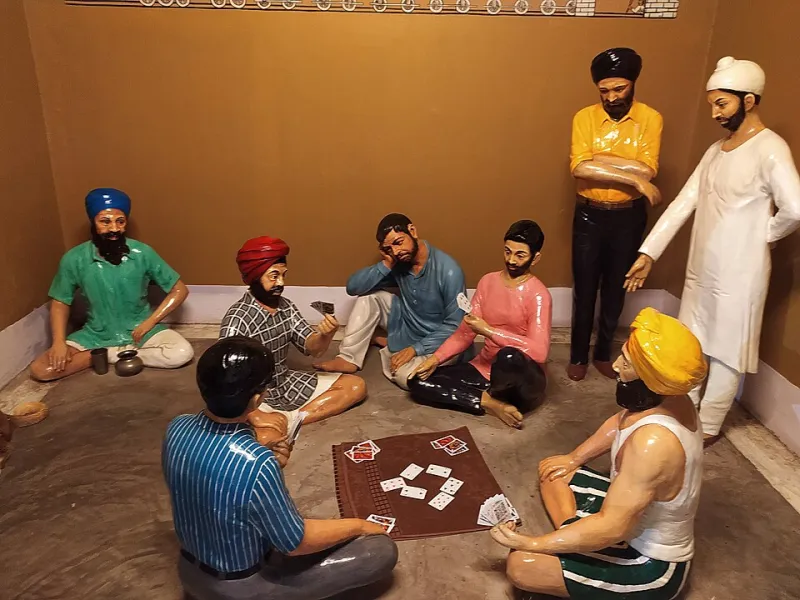
Photo: Ishan Mittal, CC BY-SA 4.0, via Wikimedia Commons
Every home game has an archaeologist. Somewhere in the family history, a well-meaning host smoothed over a dispute, and that patch became law. Twenty years later nobody remembers why it exists, but everyone plays by it.
Some of those patches are fine. Tradition is tradition. But five of them are quietly wrecking the strategy in your 27 Rummy night, and they're all doing it for the same reason: they replace decisions with luck.
Here's the list, plus what to play instead.
Rule One: Wild-Card Overload
The rule: Four jokers, all the deuces, both one-eyed jacks, and — this year, apparently — the queen of spades because someone's niece likes it.
What it does: When a significant chunk of a small deck is wild, hand-building stops being a skill and becomes a scavenger hunt. You're not planning a meld structure anymore; you're waiting to be handed a wild and then deciding which pretty thing to make with it. Worse, wild-heavy hands create scoring arguments, because nobody can agree on whether a wild can stand in for a card inside an already-wild run.
Play instead: One wild per hand, declared before the deal. If the table wants maximum chaos for a holiday night, fine — call it a variant, play two hands that way, then go back. The default should be tight enough that meld planning matters.
Rule Two: The Bottomless Discard Pile
The rule: You can pick up anything from the discard pile, any time, no restrictions, as much as you like.
What it does: It sounds generous. It's actually a strategy eraser. If picking is free, then the discard pile becomes a shared hand that everyone owns, and the entire skill of tracking what's available and what's dead evaporates. Nobody needs to plan a route to a meld, because the route is always available at zero cost.
It also slows the game to a crawl, because every turn becomes a shopping trip.
Play instead: One pick per turn, and the picked card must go into a meld you're laying down that turn. That single constraint restores the whole information layer — discards become valuable again, taking one becomes a decision with a cost, and watching the pile becomes a real skill instead of an inventory check.
Rule Three: Friendly Scoring That Never Subtracts
The rule: Everyone starts at zero, points only go up, and leftover cards don't count against you because 'it's just a friendly game.'
What it does: It removes the finish line. If holding cards costs nothing, there's no urgency to go out and no reason to dump dead weight, which means the entire late-hand game — the tense part, the good part — simply doesn't happen. Half the table stops paying attention by the third round.
Play instead: Count the leftovers, keep the running total, and then add mercy where it actually helps. A cap of 50 points per hand for newcomers, a one-time mulligan for the youngest player, a house rule that nobody gets razzed for a bad round — all fine. Score honestly, be gentle about it.
Rule Four: The Infinite Mulligan
The rule: If your first hand is ugly, toss it in and redeal. No limit. Nobody minds.
What it does: Someone at the table is now redealing four times a night, and every redeal is a small vote of no confidence in the game itself. It also quietly trains the whole table to evaluate hands by feel rather than by math — 'this looks bad' becomes the standard, when the actual question is whether the hand has a viable route.
Play instead: One mulligan per player per night, tracked openly, no judgment. Or better: allow a mulligan only if the hand has zero cards toward any meld of three. That teaches the table to look at structure instead of vibes, and it's a nice little teaching moment for newer players without slowing the night down.
Rule Five: The Unwritten Constitution
The rule: There are no written rules. The host is the Supreme Court, and rulings are issued in the moment, on vibes.
What it does: Creates disputes that have nothing to do with cards. Two players remember the wild-card rule differently. Somebody's discard-pickup limit changed last Thanksgiving. The host, who is also playing and also emotionally invested in the hand, has to make a ruling that will make one person happy and one person sulk for the rest of the night.
Play instead: One printed page, agreed on before the first deal, taped inside the box lid. It takes fifteen minutes to write and it saves approximately forty arguments a year. When a dispute comes up, the answer is 'read the sheet,' not 'ask Dave.'
How to Fix the Table Without a Committee Meeting
Don't announce a rules overhaul. Nobody wants a bylaws lecture at game night.
Instead, try this: before the next deal, say 'I read something about a pickup limit — want to try it for two hands and see if it's more fun?' Two hands is a low-stakes ask. If it sticks, it sticks. If it doesn't, you've lost nothing but a few minutes and you've learned something about your table.
Change one rule at a time. Two changes in one night feels like a new game, and people resist new games.
The Point Isn't Purity
Home games aren't tournaments, and they shouldn't be. The goal isn't to turn your kitchen table into a rules-exact card room — it's to keep the fun and the thinking. The five rules above all started as kindness. They just happened to sand off the parts of 27 Rummy that make the game worth playing.
Fix them gently, keep the snacks coming, and let the arguments be about who's been feeding the discard pile all night. That's the good kind of dispute.