Cashing In on Cautious: How to Read and Beat the Passive Player at Your Rummy Table

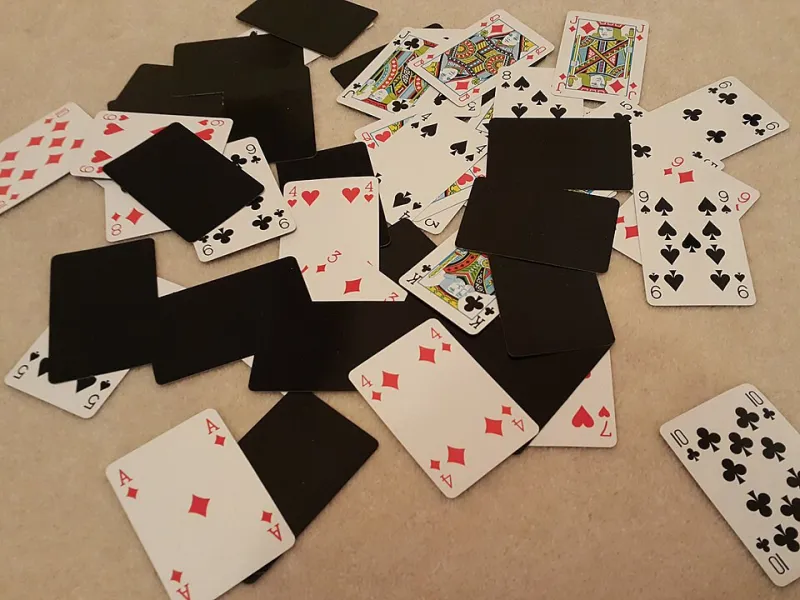
Photo: USFWS/Southeast, Public domain, via Wikimedia Commons
Picture your regular Friday night rummy game. There's always that one player — maybe it's Dave from accounting, maybe it's your cousin Linda — who never seems to take risks, rarely picks up from the discard pile, and mostly just sits there grinding through their hand like they're defusing a bomb. Quiet. Careful. Predictable.
Most players ignore these folks, writing them off as boring competition. That's a mistake. Passive players are actually one of the most exploitable opponent types at any rummy table — once you know how to read them.
First, Know What You're Actually Looking At
Not every quiet player is a passive player. Some experienced competitors deliberately slow their pace and project a low-energy presence as a form of table management — a way of gathering information while giving none away. That's not passivity. That's discipline.
A truly passive player looks different. They're reactive rather than proactive. They almost never pick up a discard unless it's an obvious, immediate fit for their hand. They hold cards longer than they should, reluctant to commit to a meld structure. They play to avoid losing rather than to win, which in rummy creates a very specific and very readable behavioral signature.
Game theory has a name for this kind of strategy: loss aversion dominant play. Behavioral economists Daniel Kahneman and Amos Tversky demonstrated that people feel the pain of a loss roughly twice as intensely as the pleasure of an equivalent gain. Passive players have, consciously or not, let that psychological bias run their entire game.
For you? That's leverage.
The Three Tells That Give Them Away
1. The Discard Pattern Is Too Clean
Passive players tend to discard in a way that minimizes their own exposure. They'll dump high-point cards early, regardless of whether those cards are actually dead to them, because they're prioritizing a low-count hand over an aggressive meld strategy. Watch the first three or four discards from a new opponent — if they're consistently offloading face cards and high-value tiles without any apparent strategic reasoning, you're likely looking at a conservative player.
The flip side: they rarely discard anything that's close to a meld. Even partial sequences they have no realistic shot at completing will stay in their hand because letting go of potential feels like a loss.
2. They Never Touch the Discard Pile
This is the biggest tell. In a competitive rummy game, the discard pile is an active resource — smart players use it tactically, both to complete melds and to gather intelligence about what opponents are building. Passive players treat it like it's radioactive. They'll draw from the stock almost every single turn, even when a discard pile card is obviously useful, because picking it up feels like showing their hand.
If you notice a player going five, six, seven consecutive turns without touching the discard pile, that's not patience. That's fear of commitment.
3. Their Hand Retention Is Telegraphed
Watch how passive players physically manage their cards. They tend to keep their hand static for long stretches, rarely reorganizing or reshuffling their card order — a behavioral cue that they've mentally settled on a structure and are just waiting for the right draws rather than actively adapting. Tournament players constantly shift their hand order as new information arrives. Passive players find a layout they're comfortable with and stay there.
"You can almost always tell within the first four or five turns," says Jerome W., a weekly rummy regular from Chicago who's been playing in his neighborhood group for over a decade. "The passive guys have a tell in how they hold their cards. Everything gets real still, real early."
How to Exploit What You've Found
Once you've identified a passive player, here's where the real work begins. The goal isn't to bully them — it's to structure your play in a way that uses their predictability against them.
Feed Them False Safety
Passive players are comforted by high-point discards from other players. It signals to them that the table is playing conservatively, which loosens their guard slightly. If you're holding a high-value card that isn't serving your meld structure, don't just dump it randomly — time your discard strategically. Tossing a king or a queen when a passive player is visibly anxious can pull them into a false sense of security right before you accelerate your own meld completion.
Control the Discard Pile's Danger Level
Because passive players avoid the discard pile, you can use it as a controlled channel. If you notice a card that looks useful but is actually dead to your hand — say, a card that would complete a sequence you've already abandoned — put it in the discard pile. A passive player won't pick it up even if it's useful to them, but an aggressive opponent might. You're essentially using the discard pile as a filter for table aggression.
Accelerate When They Signal Comfort
Passive players have a rhythm, and it's usually slow. They settle in, they get comfortable, and they start mentally coasting toward what they think is a safe finish. That's exactly when you should push the pace. Rapid meld completions, unexpected draws from the discard pile, and sudden shifts in your discard pattern will knock them off their mental script. They're not built to adapt quickly — so force the adaptation.
Don't Underestimate the Late-Game Surprise
Here's a caveat worth respecting: passive players occasionally go deep into a hand before revealing a surprisingly strong completion. Because they've been holding cards and building quietly, they sometimes land a near-complete hand that closes faster than expected. Don't get so focused on exploiting their passivity that you stop tracking their draw count. If a passive player suddenly starts picking up from the discard pile after eight turns of ignoring it, pay attention. Something changed.
The Bigger Picture at an American Rummy Table
In casual American rummy culture — whether you're playing at a kitchen table in the suburbs or a weekly club game at your local community center — passive players are everywhere. They're often newer players, older players who've developed conservative habits over the years, or folks who are simply more interested in the social experience than the competition.
That's totally fine. But if you're playing to sharpen your game, these opponents are genuinely valuable. They offer a low-risk environment to practice reading behavioral patterns, test discard manipulation strategies, and build confidence in your own decision-making speed.
Think of them not as weak competition, but as a training ground. Every passive player you learn to read cleanly makes you sharper against the aggressive ones waiting for you at tournament level.
The table is full of information. You just have to know where to look.