Too Many Cards, Too Many Choices: The Mental Battle Behind 27-Card Rummy

Photo by Photo by 2H Media on Unsplash on Unsplash
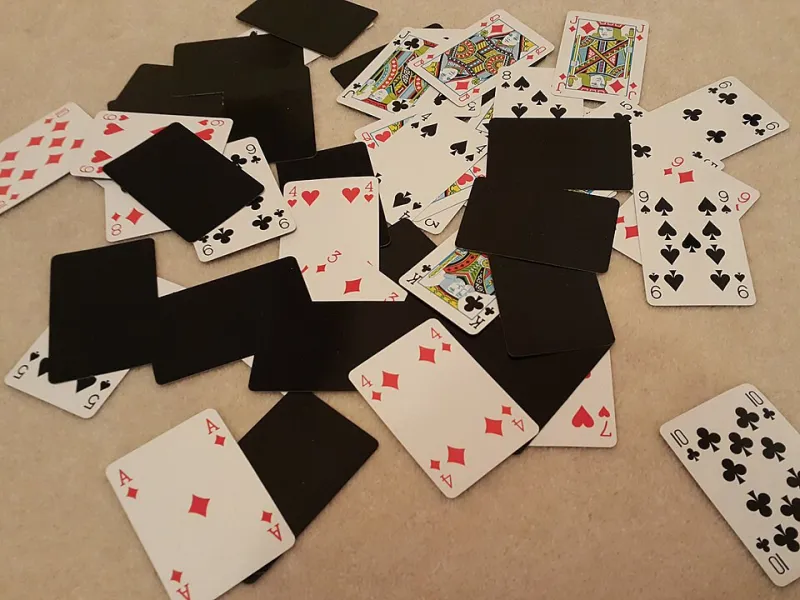
There's a moment every new rummy player knows well. You've just been dealt your full hand, 27 cards fanned out in front of you, and instead of feeling ready to play, you feel... stuck. Like you're staring at a math problem that keeps changing shape every time you blink.
That feeling isn't weakness. It's science.
The 27-card format isn't just a rule quirk — it's a cognitive stress test. And understanding why that specific number creates so much mental pressure is one of the fastest ways to start playing sharper, cleaner, and a whole lot more confidently.
Your Brain Wasn't Built for This
Behavioral economists have a concept called choice overload — the idea that more options don't always lead to better decisions. In fact, research from Columbia University's business school famously showed that people presented with too many choices often make worse decisions, or no decision at all. Sound familiar at the rummy table?
With 27 cards in hand, you're not just managing one or two potential melds. You're tracking partial sequences, possible sets, dead cards, and the shifting value of every draw and discard — all simultaneously. That's not strategy. That's triage.
Amateur players tend to approach this by trying to hold on to everything that shows even marginal potential. A loose three-card run that needs two specific draws. A pair that might become a set if the right card appears. The brain, naturally reluctant to let go of what feels like possibility, starts hoarding. And hoarding with 27 cards is a fast track to paralysis.
The Memory Load Nobody Talks About
Here's something the strategy guides often skip: working memory — your brain's short-term mental workspace — has a hard cap. Cognitive psychologist George Miller's classic research pegged it at roughly seven items, plus or minus two. That's fine for a grocery list. It's nowhere near enough for a live 27-card hand.
Tournament players who've been grinding competitive rummy for years don't just remember more cards. They've built mental frameworks that compress information. Instead of tracking 27 individual cards, they think in clusters — active melds, potential melds, dead weight, and danger cards. It's the same skill a chess player uses when they stop seeing individual pieces and start seeing patterns.
Casual players, though? They're usually tracking cards one at a time. That's why the discard pile becomes a crutch — it's easier to react to what's visible than to actively manage what's already in hand.
"The biggest tell for a newer player isn't how they bet," says Marcus T., a tournament regular from the Atlanta rummy circuit. "It's how long they stare at their hand before making any move. That pause? That's decision fatigue setting in early."
Risk Assessment Gets Weird at 27
Here's where behavioral economics gets especially interesting. With fewer cards, risk assessment is relatively clean — you either have the cards to complete a meld or you don't. But with 27 cards, you're almost always close to something. And that closeness is psychologically dangerous.
Researchers call it the near-miss effect. Slot machines are engineered around it. In rummy, it plays out when a player holds onto three partial sequences because each one feels just one or two cards away from completion. The rational move — dropping dead cards, committing to your strongest lines — gets overridden by the emotional pull of almost.
Amateur players consistently overvalue their partial hands. They discount the probability that their opponents are also drawing toward completions, and they underestimate how quickly a 27-card hand can turn from promising to unmanageable.
What Tournament Players Do Differently
The players who thrive in 27-card formats aren't necessarily faster thinkers. They're more disciplined thinkers. A few habits that consistently separate the casual crowd from the competition:
They decide their primary meld structure early. Rather than keeping every option alive, strong players pick two or three core sequences or sets to build around within the first few turns. Everything else gets evaluated against that structure — if a card doesn't serve the plan, it's gone.
They treat dead cards as liabilities, not potential. Every card that isn't actively contributing to a meld is costing you mental bandwidth. The faster you identify and release dead weight, the cleaner your decision-making becomes.
They use the discard pile as intelligence, not just a resource. Watching what your opponents discard — and, crucially, what they pick up — tells you which suits and values are dangerous to hold. This external data reduces internal memory load significantly.
They build pre-game routines. Before sitting down for a serious session, experienced players have rituals that center their focus. Whether it's a few minutes of quiet, a specific breathing pattern, or just reviewing their core strategy priorities, these habits reduce cognitive noise before the cards are even dealt.
"I used to think the 27-card format was just about having more cards to work with," says Priya S., a semi-professional player based in Houston who's been competing in regional tournaments for four years. "But it's really about having more decisions to make. The players who win are the ones who've figured out how to make fewer of them."
The Sweet Spot Is a Skill, Not a Luck
Here's the reframe that changes everything: the cognitive difficulty of a 27-card hand isn't a flaw in the game. It's the feature. It's the mechanism that rewards players who've invested in mental discipline, pattern recognition, and emotional control — and punishes those who haven't.
The good news? These are trainable skills. Decision fatigue gets better with deliberate practice. Memory load decreases as you build stronger mental frameworks. Risk assessment sharpens as you log more hands and internalize the math.
If you're finding the 27-card format overwhelming, you're not bad at rummy. You're just at the beginning of a learning curve that every strong player has climbed. The difference between where you are now and where the tournament veterans sit isn't talent. It's reps, reflection, and the willingness to understand what's happening in your own head while the cards are still in play.
Deal smart. Your brain is part of your hand.