Playing It 'Safe' Is Costing You Games: The Truth About Predictable Discards
There's a moment in almost every rummy session where you're staring at your hand, trying to figure out what to toss. Your eyes land on a low card — maybe a 2 of clubs, maybe a stray 4 that doesn't connect to anything. It feels like a freebie. No risk, no drama, just a clean discard that keeps your hand lean and your point count low.
Here's the problem: that exact thought process is what experienced players are counting on you to have.
At 27 Rummy, we talk a lot about reading the discard pile, tracking what's been played, and building hands with intention. But there's a flip side to all that strategy that doesn't get nearly enough attention — the way your discards are telling the whole table a story about what's sitting in your hand. And if you're always reaching for the "safe" card, that story is basically written in neon lights.
What 'Safe' Actually Signals
When players consistently dump low-value, isolated cards — the kind that don't belong to any obvious suit run or number sequence — they think they're being neutral. Invisible, even. But skilled opponents aren't just watching what you pick up. They're cataloging everything you throw away.
Here's what a predictable discard pattern actually communicates:
- Your hand structure. If you're consistently ditching mid-range cards from scattered suits, a sharp player can start to map out which suits and sequences you are holding. Every discard is a negative data point that narrows down the possibilities.
- Your game plan. Constant low-card dumps suggest you're building toward a specific set or run and protecting it aggressively. That tells opponents roughly how close you might be to finishing.
- Your risk tolerance. Players who never throw anything "valuable" are often closer to completing their hand — or terrified of losing points. Either way, that information is gold at a competitive table.
The bottom line? There's no such thing as a truly neutral discard once someone is paying attention.
The Psychology of Misdirection
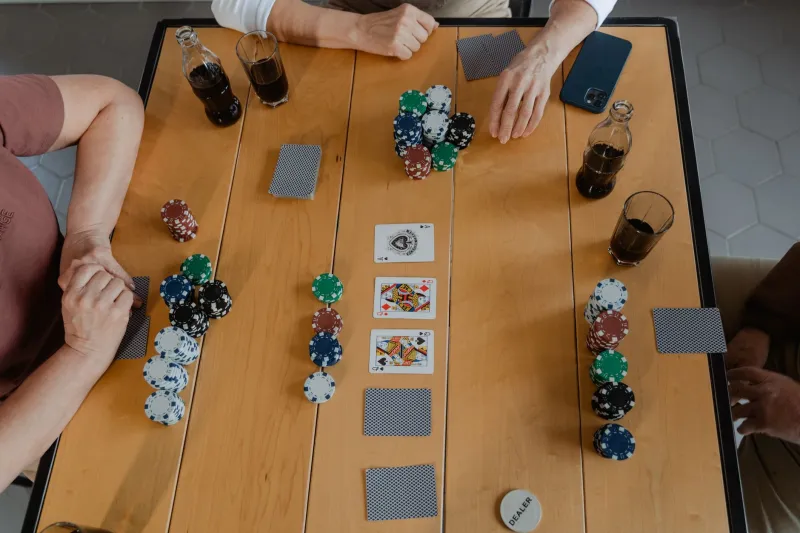
Think about what a poker player does when they're holding a strong hand. They don't sit up straight and start betting aggressively. They stay calm, keep their face neutral, maybe even act a little uncertain. Rummy isn't poker, but the psychological layer is just as real.
Strategic discarding is about controlling what your opponents believe about your hand — not just about what's actually in it.
One technique worth adding to your toolkit: the deliberate unexpected discard. This means occasionally throwing a card that seems valuable or connected, even if it costs you a little short-term, specifically to throw off the read. Toss a mid-range card from a suit you actually have runs in, and suddenly the opponent who was tracking your hand has to recalibrate. Did you finish that run? Did you switch strategies? Are you further along than they thought?
That confusion is worth more than the card you gave up.
Tournament Tables Don't Forgive Patterns
At casual kitchen-table games, predictable discards might not cost you much. But step into a competitive environment — like the multi-table tournaments 27 Rummy runs — and those patterns become liabilities fast.
Consider a scenario that plays out regularly in high-stakes rummy: a player has been methodically discarding low off-suit cards for the first third of the game. An observant opponent clocks this and starts to piece together that the player is likely holding a strong heart run and a partial set in spades. So when a key spade hits the discard pile, the opponent grabs it — not because they need it immediately, but to block the other player's likely completion path.
The "safe" player never saw it coming. They were too focused on managing their own hand to realize they'd been broadcasting their intentions the whole time.
In documented tournament play, some of the biggest momentum swings come not from dramatic draws or lucky picks, but from a single discard choice that forced a table-wide recalculation. A player who suddenly throws a high-value card mid-game can reset every assumption their opponents have built up. It's disruptive in the best possible way.
How to Build a Smarter Discard Strategy
So how do you stop being predictable without blowing up your own hand? It's less about randomness and more about intentional variability. Here are a few principles to start working into your game:
Vary your discard range. Don't always default to the lowest-value card available. Occasionally discard something mid-range or from a suit you've already discarded from before. Keep opponents guessing about which suits you're actually building in.
Use the discard pile as bait. Sometimes throwing a card that looks useful to a specific opponent — one you've noticed picking up from a particular range — can force them to reveal more about their hand. If they bite, you learn something. If they don't, you've created doubt.
Track your own patterns before opponents do. Before a session, ask yourself: what do I usually throw first? If you can identify your own habits, you can consciously disrupt them before a sharp player does it for you.
Factor in where you are in the game. Early discards can afford to be more experimental. As the game tightens and the discard pile grows, every card you throw carries more weight. Adjust accordingly.
Don't mistake low-point cards for low-risk cards. A 3 of diamonds might not cost you much in points, but if it's the fifth card from that suit you've discarded, you've basically handed your opponent a blueprint.
The Real Risk Is Comfort
The reason so many players fall into predictable discard habits isn't laziness — it's comfort. Throwing a safe card feels like a controlled decision in a game full of variables. And in the short run, it often is the lower-risk move.
But rummy, especially at 27 cards, is a long game. The decisions you make in the first few rounds set the tone for everything that follows. If you've trained your opponents to read you by the halfway point, you're already playing catch-up.
The best players at 27 Rummy aren't just thinking about what they need. They're thinking about what their opponents think they need — and working to make those two things as different as possible.
So next time you reach for that obvious throwaway, pause for a second. Ask yourself: is this the right card to discard, or just the comfortable one? Because at a sharp table, comfort has a price — and it usually shows up on the scoreboard.